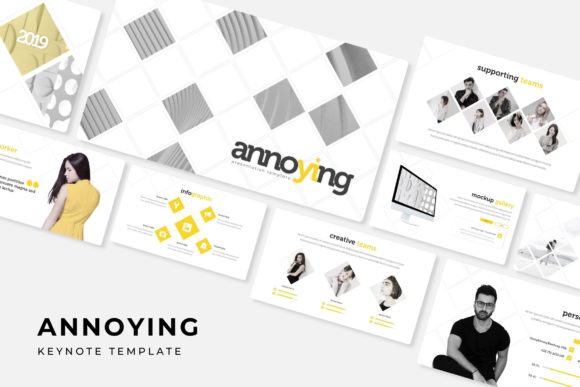
Annoying Keynote Template: A Versatile Presentation Powerhouse for Modern Professionals
We have all sat through presentations that felt lifeless. That generic corporate deck with the same icons everyone uses. The slide that looks like it was thrown together in five minutes. Then there is the other extreme: the presentation that tries so hard to be flashy it ends up distracting from the message itself. Finding a middle ground can feel impossible. That is where the Annoying Keynote Template steps in. Despite the name, there is nothing irritating about this deck. Instead, it offers a rare combination of volume, variety, and practical design that works across many real-world situations.
Why 150 Slides Changes the Game for Busy Professionals
Number of slides often matters more than people admit. A template with twenty slides forces you to reuse layouts. You end up stretching content to fit or, worse, cutting valuable information. With 150 total slides, the Annoying Keynote Template removes that pressure. You can build a detailed pitch, a training module, or a company wide update without repeating a single layout. For someone preparing a quarterly business review, that means you can dedicate distinct slides to revenue, operational highlights, team achievements, and forward looking strategy without resorting to the same bullet point format every time.
For marketing professionals, the volume becomes a time saver. Imagine you need to create multiple client facing decks in one week. Each client wants a unique look, but you do not have hours to redesign from scratch. With thirty slides per color variant across five color variations, you essentially get five distinct templates in one purchase. You can assign a different color scheme to each client and still maintain a consistent structural quality. The drag and drop picture placeholders further speed things up. Drop in a product shot, a team photo, or a screenshot, and the slide adjusts automatically. No resizing, no alignment headaches.
Real Situations Where the Template Shines
Consider the freelance consultant. You walk into a room with potential clients who have seen a hundred presentations. Your content is solid, but your deck needs to feel polished without looking like a corporate clone. The pixel-perfect illustrations in this template give you a handcrafted feel that signals attention to detail. You are not using the same stock graphics everyone else uses. The handcrafted infographics, in particular, help you explain complex ideas like market positioning or workflow efficiency without drowning your audience in text.
Then there is the educator or trainer. When you teach a subject, engagement matters as much as accuracy. Section break slides act as natural pauses. They give your audience a moment to process before moving into the next topic. You can use them to signal a shift from theory to practice or from lecture to group activity. The gallery and portfolio slide is another underrated tool in this context. If you teach design or communication, you can showcase student work or case studies in a visually organized way that feels curated, not cluttered.
Entrepreneurs pitching to investors face a different challenge. You have limited time and high stakes. Every second counts. The master slides based structure ensures that your font sizes, spacing, and alignment stay consistent even when you swap content in and out. You can rearrange slides, delete sections, or add new ones without breaking the design. That reliability matters when you are editing in a hotel room the night before a meeting. Knowing that the slide you add will automatically match the rest of the deck takes one worry off your plate.
How Different Users Get Different Value
One template cannot serve everyone the same way, and that is okay. The Annoying Keynote Template adapts because its strengths matter in different contexts.
For the in-house marketing manager, the biggest win is the five premade colors. You can pick the color variation that aligns with your brand guidelines or, if you present to external partners, choose a neutral palette that does not clash with their branding. The thirty slides per template mean you can cover everything from market analysis to campaign results to future strategy without running out of fresh layouts. The resizable and editable graphics also let you customize without needing design skills. You do not have to request help from a graphic designer for basic tweaks.
For the startup founder, speed is everything. The drag drop functionality and picture placeholders cut down the time you spend formatting. You focus on your message instead of adjusting margins. The widescreen format, delivered as 5 PPTX Widescreen files, looks modern on any projector or laptop screen. You avoid the awkward black bars that come with older square formats. Small details like that shape how perceived credibility.
For the event organizer or conference speaker, the section break slides become a tool for pacing. A ten speaker event requires decks that transition smoothly. When every speaker uses the same template, the event feels cohesive. You can even hand off the readme first file to ensure everyone knows which fonts to download and how to maintain consistency. The free font download link included means no one has an excuse for broken typography.
Strengths That Make It Practical Day to Day
Pixel-perfect illustrations are not a marketing gimmick. When you project a slide on a large screen, every imperfection becomes visible. A chart that is slightly misaligned or an icon that looks fuzzy undermines professionalism. This template avoids that. The illustrations are sharp, and the handcrafted infographics look intentional rather than generic. They communicate that you invested time in your presentation, even if you built it in under an hour.
The fact that everything is based on master slides matters more than most people realize. If you decide to change a font across all slides, you do it once. If you want to adjust the color of a recurring element, you update the master. Consistency is automatic. For teams where multiple people contribute to one deck, this feature alone prevents frustration. No one accidentally changes a slide's background or uses the wrong font size.
Another practical benefit: the gallery and portfolio slide. Many templates treat portfolio slides as afterthoughts. Here, they are intentional. If you sell a service, you can showcase past projects in a way that lets the visuals speak. If you are an architect or photographer, your work is the presentation. The template does not compete with your content; it frames it.
What to Consider Before Choosing This Template
No template is perfect for everyone. The Annoying Keynote Template includes 5 PPTX Files, so you need access to PowerPoint or Keynote that supports that format. If you use Google Slides exclusively, you might need to convert files, and that can sometimes shift formatting. Always test a few slides first before committing to a full deck.
The photographs used in the preview are not included. They are for illustration only. That is standard in the template world, but it means you need your own images. If you do not have a library of high quality photos, you will need to source them separately. The picture placeholders make adding your own images easy, but the template does not supply them.
Another point: 150 slides is a lot. Some people might find that overwhelming at first. You do not have to use all of them. The strength is having options, but if you prefer a minimal approach, you might want to hide the slides you do not need rather than delete them permanently. That way, they remain available for future updates.
Font licensing is also worth a quick check. The free font download link included covers the fonts used, but if you want to use those fonts in commercial projects, confirm that the license allows it. Most free fonts for personal use require a separate license for commercial work. The readme first file should clarify this, but it is worth verifying before you use the deck in a paid client presentation.
Realistic Expectations for Everyday Use
This template works best for people who create presentations regularly and want to reduce repetitive formatting work. It is not a magic solution that writes your content or structures your narrative. You still need to think about your message. What it does is remove the friction between having good content and presenting it well.
If you are a solo professional, having five color variations in one download means you can rebrand a deck for different audiences without starting over. If you are part of a team, the consistency across master slides helps everyone stay aligned. If you are someone who values visual quality but does not have design training, the resizable and editable graphics give you control without requiring expertise.
The handcrafted infographics deserve special mention. They are not auto-generated charts. They are built with intention, which means they convey data in a way that feels human. Use them for process flows, comparison diagrams, or timeline overviews. They stand out because they look like someone thought about how to present the information, not just dumped numbers into a pie chart.
Final Observations on Practical Value
The best tools are the ones you forget you are using. When a template works well, your audience focuses on your message, not on how the slides look. The Annoying Keynote Template aims for that level of invisibility. It gives you enough variety to keep each presentation fresh, enough structure to keep you consistent, and enough flexibility to adapt to your specific needs. Whether you are pitching, teaching, reporting, or showcasing, having a reliable deck that does not fight you is a genuine advantage.
For anyone who regularly faces the blank slide problem, this template offers a way out. You are not locked into one style. You are not forced to use layouts that do not fit your content. You have 150 slides, five colors, and enough practical features to build presentations that feel intentional. That is not annoying at all. That is exactly what most presenters need.